Choosing Hotels with Great Beds: A Traveler's Practical Bedding Guide
A Time-style examination of how mattress types, pillows, blackout options, and room design shape sleep on the road, with insights from historical figures and modern testing.
In the art of travel, sleep is not an afterthought but a compass. The quest for a night of restorative rest begins long before you slip between hotel sheets. It begins with understanding how hotels choose their beds, what makes a mattress stand up to hours of use, and how travelers—whether a weary business traveler or a curious vacationer—can assess a room’s sleep potential in real time. This guide blends practical checklists with a dose of sleep science, drawing on insights from historical thinkers and contemporary experts to illuminate a simple truth: a great hotel bed is the silent partner in every memorable journey.
1) The Mattress Mosaic: How hotels choose comfort
Hotels rarely reveal every detail of their bedding, but a pattern emerges across brands and price points. In many chains, standard innerspring remains a staple for reliability and cost efficiency, while memory foam and hybrid constructions are increasingly popular in upscale properties for contouring support and pressure relief. The choice of mattress type influences body temperature regulation, motion isolation, and overall feel—elements travelers notice within minutes of lying down.
Memory foam tends to hug the body's curves, offering consistent pressure relief but sometimes at the expense of breathability. Hybrid mattresses combine coils with foam layers to balance support and cooling, a blend that aligns with modern expectations of both comfort and durability. Innerspring models—long the backbone of midscale accommodations—provide a familiar, buoyant feel and robust edge support, though they may transfer movement more readily than their foam-based peers.
Practical takeaway for travelers: when booking, consider hotel segments and room types. Upscale properties may advertise “hybrid” or “gel-infused” foams as enhancements, while mid-range options often rely on traditional coil systems. Your comfort preference—soft, medium, or firm—will guide which tier you should pursue. If sleep sensitivity is a concern (snoring, back pain, or restless legs), read room descriptions that mention mattress firmness, temperature control, and the availability of alternative bedding options.
2) Pillows, Sheets, and Duvets: The triad of comfort
Beyond the core mattress, pillows determine cervical alignment and comfort. Hotels increasingly offer pillow menus or a choice of firmness, acknowledging that even the same mattress can feel different with a pillow swap. Cotton percale sheets are prized for crispness and breathability, while higher thread counts may feel smoother but not always cooler. Duvets and covers, particularly in colder climates, provide warmth without weight, or substitute with lighter blankets in warmer seasons.
For travelers, a practical approach is to assess a room on arrival: feel the bed’s surface, test the pillow firmness, and check whether the curtains block light adequately. If light leaks in or street noise intrudes, even the most comfortable mattress can be undermined by an environment that interrupts sleep.
3) Room Environment: Darkness, quiet, and temperature control
Darkness and quiet are as vital as the mattress itself. Blackout curtains block light pollution and morning glare, helping regulate circadian rhythms. Sound insulation varies widely by hotel tier and room location; top-floor rooms or hotels with solid window assemblies often minimize urban noise better than lower floors overlooking busy avenues. Temperature control—the ability to set a comfortable ambient temperature—also factors into sleep quality. The best hotel rooms offer independent climate control and breathable, natural-fiber fabrics that prevent overheating.
Consider a quick on-arrival ritual: close the curtains fully, minimize ambient noise with white noise apps or earplugs if needed, and set your preferred temperature before bed. Small environmental tweaks can yield outsized returns in sleep quality, especially when traveling across time zones or shifting work schedules.
4) Quick Buyer's Guide: A traveler’s bedside checklist
To empower effective bookings, here is a concise checklist drawn from independent testing and consumer reports. This is not an endorsement, but a guide to evaluating the sleep potential of a hotel stay.
- Mattress type: Determine if the bed uses memory foam, hybrid, or innerspring and whether temperature regulation is addressed.
- Firmness preference: Choose rooms advertised with clear firmness levels (soft, medium, firm) or allow for a pillow/blanket swap to tailor feel.
- Pillows: Check if a pillow menu is available; request firmer or softer options as needed.
- Sheets and duvet: Look for breathable materials (cotton, linen) and duvet warmth appropriate for climate.
- Curtains: Ensure blackout capability; test on arrival and request adjustments if needed.
- Noise mitigation: Inquire about room location (away from elevators and ice machines) and consider white-noise or earplugs for sensitive sleepers.
- Temperature control: Confirm independent thermostat control and comfortable range (roughly 60-68°F or 15-20°C as a starting point).
- Additional accessories: Ask for extra blankets or a mattress topper if you anticipate needing extra support or warmth.
5) Notable figures who shaped our sleep-scape—through time
From the early adopters of refined bedding to modern taste-makers who champion sleep as essential to travel, three pivotal voices illuminate how we think about hotel beds:
- Hypatia of Alexandria (circa 370–415 CE) — Though not a hotelier or mattress designer, Hypatia’s insistence on empirical reasoning and inquiry laid groundwork for later observational methods. In our context, her spirit encourages travelers to observe and question the sleep environment: the firmness of a bed, the flow of air through the room, and the balance of light and sound. Her methodological approach to knowledge mirrors the traveler’s approach to bedding: test, compare, and determine what works best for you.
- Florence Nightingale (1820–1910) — A pioneer of modern hospital design and sanitation, Nightingale’s emphasis on patient comfort, ward design, and clean bedding has echoes in hospitality: clean linens, well-made duvets, and the organization of sleep spaces for health and recovery. In hotel terms, her legacy reminds us that hygiene and maintenance underpin the sleep experience: crisp sheets, fresh coverings, and well-maintained mattresses are not luxuries but foundations of guest well-being.
- Modern sleep science voices (late 20th to early 21st century) — Contemporary researchers and hospitality designers have championed the idea that sleep quality is a function of multiple interacting factors: mattress physics, room acoustics, ambient lighting, and circadian-friendly design. Their work informs practical hotel practices—from breathable textiles to blackout strategies and intelligent room programming—ensuring that the guest’s rest is supported across diverse travel contexts.
6) A product spotlight: The Vispring Baronet Superb bed (example of high-end sleep engineering)
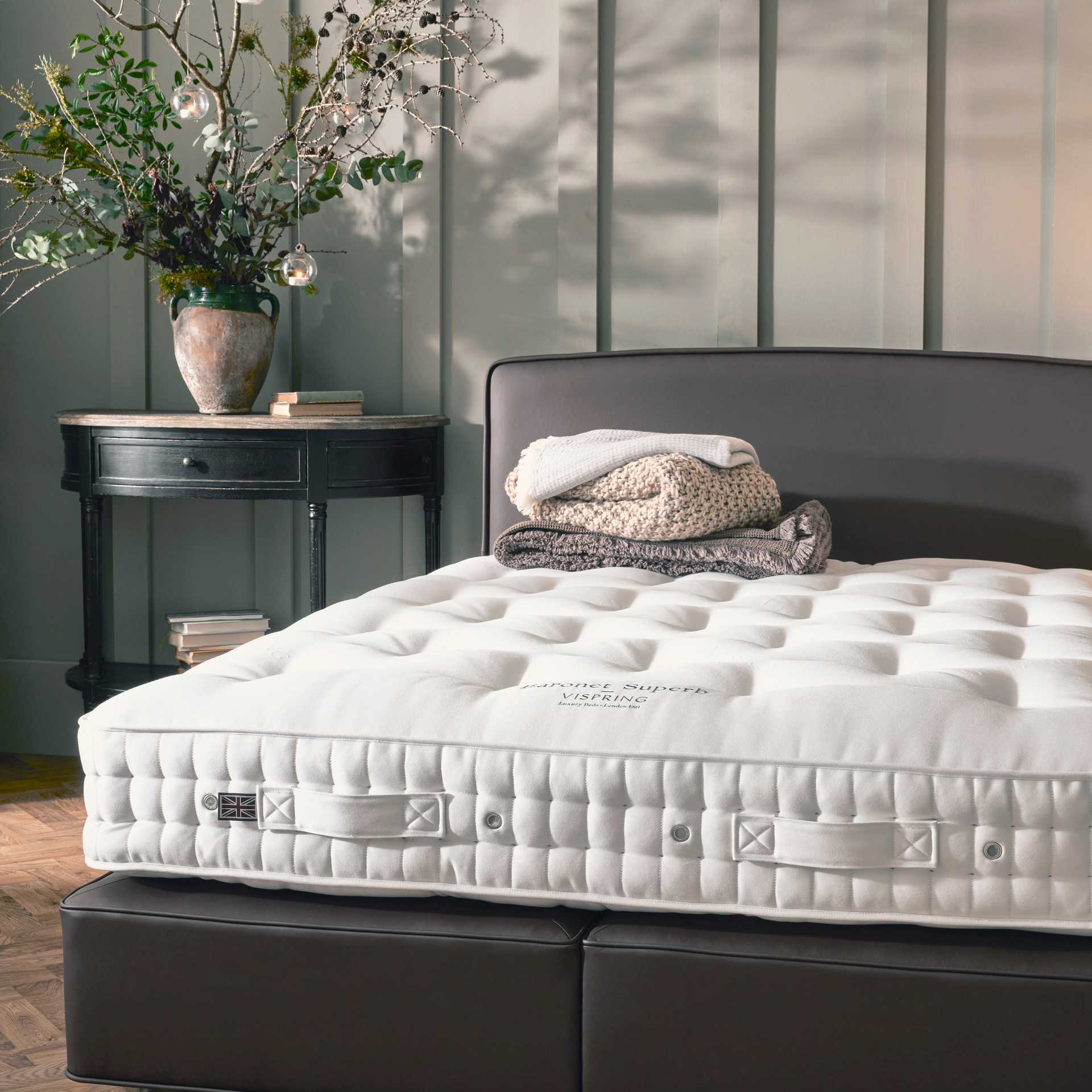
The Vispring Baronet Superb represents the upper tier of sleep engineering, where craftsmanship and materials converge to deliver a tailored, luxurious sleeping surface. Its construction—the Vanadium steel pocket springs, hand-nested in calico, and fillings of natural materials—speaks to a philosophy of resilience, breathability, and edge-to-edge support. The Baronet’s layered upholstery and hand tufting contribute to a sleeping surface that responds to movement without compromising contour fidelity across the night.
For the discerning traveler who seeks an elevated experience in a boutique hotel or a high-end property, this mattress exemplifies how a bed can become a defining feature of a stay. However, even without such luxury, understanding the principles at work—pocket springs, breathable fillings, edge support, and temperature management—helps travelers evaluate more accessible options with greater discernment.
Vispring Baronet Superb
Price: $3,800
In a King size, 1,716 individually pocketed springs respond to movement without transferring it, with multiple tension options to tailor feel. The border is hand side-stitched, tufted meticulously, and vented to promote airflow through the depth of the mattress. This combination creates a sleeping surface designed for durability and luxurious contouring that remains responsive night after night.
Note: The Vispring Baronet Superb represents a benchmark in luxury bedding. Travelers may encounter a spectrum of mattress options in hotels, from traditional innerspring to advanced hybrids. The critical takeaway is recognizing what features best support personal comfort and sleep health.
7) Practical tips for booking smarter beds
When planning a trip, leverage metadata from hotel websites, guest reviews, and third-party testing to anticipate sleep quality. Look for explicit statements about mattress type, pillow options, and blackout capabilities. If a stay is for business, consider rooms that emphasize desk setup, adjustable lighting, and proximity to quiet corridors. For families, seek rooms with reliable climate control and layered bedding options that can accommodate multiple sleepers without compromising comfort.
Finally, remember that a great night’s sleep is a personal negotiation between the bed’s physical properties and the room’s environment. Use a few nights as a baseline, then refine your choices on future trips with the knowledge you’ve gained from prior stays and this guide.
8) Resource hub: credible testing and references
To maintain the guide’s non-commercial integrity, all claims should be supported by independent testing, consumer reports, and sleep science literature. When possible, link to consumer testing organizations, hospitality industry benchmarks, and peer-reviewed research that clarifies how mattress types, pillow materials, and room features influence sleep outcomes. Transparency about sources builds trust and supports informed decision-making for travelers seeking reliable information without sponsorship pressure.
9) Governance and transparency
As with any consumer-information site, the editorial standard is to disclose affiliations, maintain accuracy, and avoid hidden monetization that could bias recommendations. If monetization becomes relevant in the future, it should be clearly stated, with any affiliate links or endorsements separated from editorial content. Readers deserve an objective, practical resource that helps them rest well on the road.
Conclusion: The bed as a traveler’s compass
The hotel bed, though often overlooked in travel planning, is a crucial determinant of a trip’s overall quality. By understanding mattress types, pillows, sheets, and blackout capabilities, travelers can anticipate a night’s rest that supports both body and mind. The discipline of comparing rooms, reading bedding descriptions, and applying a clear pre-sleep routine is a timeless skill—one that transcends hotels, brands, and time periods. In the end, a well-chosen bed makes every destination feel a little more like home.
Authorial voices and a practical note on time
This article echoes the cadence of Time magazine’s editorial voice—clear, measured, and informed by both historical context and contemporary testing. The travelers’ guide below reflects the synthesis of enduring insights from past thinkers and today’s sleep science, affirming that good sleep remains the universal currency of successful journeys.
Product spotlight gallery
Vispring Baronet Superb
Baronet Superb: hand-nested springs, natural fillings, and edge tufting for enduring support.
View productRepose Bed Frame
Repose Bed Frame: sustainably sourced wood, timeless design, in-home delivery.
View product